CCTM Conference Program: Thursday, June 11
11:30 — Registration
 12:30 — CCTM Opening and Keynote with Zarek Drozda, Director, Data Science 4 Everyone 12:30 — CCTM Opening and Keynote with Zarek Drozda, Director, Data Science 4 Everyone
Zarek Drozda helped launch Data Science 4 Everyone (DS4E) in 2019, co-organizing a coalition of now 1000+ education leaders to advance data science and data literacy education in K-12 schools. Zarek has worked at the intersection of applied research, data, and policy. He served as a Data Science Fellow for the U.S. Department of Education’s Institute of Education Sciences (IES), where he led research on data science, artificial intelligence, blockchain, and other emerging technology education. While working at the Federal level, Zarek also advised the national COVID response, coordinating data analytics for an inter-agency team between the White House, Department of Education, and Center for Disease Control (CDC). Prior to Federal service, Zarek helped build a social impact incubator (the Center for RISC) with economist and Freakonomics co-author Steven Levitt. Zarek earned a Bachelor’s degree in Economics from the University of Chicago, and loves using data to tackle complex social problems.
1:30 - 1:45 — Partner Interactions/Transitions
Session A, Thursday, 1:45 - 2:45 (Expand/Collapse)
Bringing Data and Statistics to Life with Free Interactive Simulations
- Lead Presenter: Catherine Carter, PhET Interactive Simulations, University of Colorado Boulder
- Location: Library
- Intended Audience: 6-8, 9-12, Post Secondary, Pre Service, Coaches, Administrators
- Session Description: Join us to explore random distributions using data created in real-time by shooting projectiles out of cannons! Learn facilitation strategies that promote agency by leveraging student creative problem solving with free tools such as PhET simulations and CODAP. Give meaning to measures of center and variability that tap into student intuition and curiosity, blending statistics and physics in meaningful ways. Walk away with sim-based ready-to-implement lessons that inspire exploration and deep learning.
Putting Data in the Driver’s Seat
- Lead Presenter: Becky Ramirez, Cengage
- Location: Room 110
- Intended Audience: TBD
- Session Description: In this session, participants will explore how purposeful use of formative assessments can transform K–12 math instruction. We will examine practical strategies for collecting meaningful evidence of student learning, identifying trends, and responding with targeted instructional moves that deepen understanding. Attendees will engage with sample data sets and classroom scenarios, and leave with clear, actionable practices to strengthen student success through data-informed decision-making.
Engage, Inspire Low-Floor, High-Ceiling Activities
- Lead Presenter: Marissa Caine, Great Minds
- Location: Room 111
- Intended Audience: K-12
- Session Description: Low-floor, high-ceiling tasks engage all students in rigorous mathematics. They allow students to see themselves as thinkers and doers of mathematics. Take a deep dive into multiple standards-aligned low-floor, high-ceiling tasks and explore why these powerful tasks increase rigor and engagement. Then learn strategies for design and implementation.
Geodata Across the Curriculum
- Lead Presenter: Joseph Kerski,
- Location: Room 112
- Intended Audience: 6-8, 9-12
- Session Description: Join Joseph as we demonstrate why and how to teach with geo-data: Maps, satellite imagery, and visualizations about population change, natural hazards, water, past and current events, sports, clothing, agriculture, and more.
Teamwork and Critical Thinking
- Lead Presenter: Sharon Smith, Jump Start Bridge
- Additional Presenters: Sally Ann Rhea, Jump Start Bridge
- Location: Room 113
- Intended Audience: 3-5, 6-8, 9-12
- Session Description: The card game, Bridge, is the ultimate Mind Sport. Bridge teaches teamwork, critical thinking and logic. Bridge is a partnership game that improves social communication, strategic thought, complex problem solving, and it is FUN!
Leveraging Number Sense Interviews to Improve Student Outcomes
- Lead Presenter: Katie Johnson, Forefront Education
- Location: Room 114
- Intended Audience: K-2, 3-5
- Session Description: Teachers give many assessments in their classrooms, but not all of these assessments lead to instructional shifts or actions. This session will highlight how number sense screener interviews can provide teachers actionable information. Participants will engage in the six facets of number sense by examining interview assessment tasks with videos of student responses to analyze student thinking including common misconceptions and determine next steps for instruction.
Experience AI: Computational Thinking in Machine Learning for Kids
- Lead Presenter: Laura Gray,
- Location: Room 115
- Intended Audience: 6-8, 9-12
- Session Description: This session will highlight the convergence of Data Science in the Computer Science discipline and will detail lessons, examples in classrooms, stories from students, and more!
Using Math Games to Connect with Families
- Lead Presenter: Shari Solem, Evans Elementary in School District 49
- Additional Presenters: Jenn Braitman, Evans Elementary
- Location: Room 116
- Intended Audience: K-2, 3-5
- Session Description: Learn one way to create a connection with families around math through games. Come play games that need only simple supplies and hear how we thought through and created a game of the month program that puts math games in the hands of families. Students play and become the experts, then take the game home to share with their family. Families get to see what students know and have a practical (and fun!) way to practice math at home. Listen to what our families are saying when we give them tools to practice math together.
- Lead Presenter: Christine Walker, Utah Valley University
- Additional Presenters: Britney Walker, John Hancock Charter School
- Location: Room 117
- Intended Audience: 3-5, 6-8, 9-12
- Session Description: What are the best practices for teaching mathematics to English Language Learners (ELLs) and immigrant students? Aligned with the conference theme, Mathematics Rising: Teachers Leading the Ascent, this session highlights current research on instructional strategies, evidence-based practices, and recommendations that promote equitable learning opportunities for ELLs. Participants will leave with practical resources and ready-to-use documents that can be immediately implemented in their own classrooms, empowering teachers to lead all students toward greater mathematical understanding and achievement.
What We Believe; How We Teach
- Lead Presenter: Donna Young, CCSD #5
- Location: Room 118
- Intended Audience: 6-8, 9-12
- Session Description: How does what we believe about mathematics shape our teaching practice? In this interaction session, attendees will engage in thought-provoking activities designed to surface and examine their beliefs about the nature of mathematics. Through collaborative reflection and discussion, participants will explore how these beliefs support or constrain their implementation of the NCTM’s Eight Effective Mathematics Teaching Practices.
Fostering Student Discourse While Solving a Proportional Reasoning Mystery
- Lead Presenter: Sandy Fritz, Connected Mathematics & Lab-Aids
- Location: Room 120
- Intended Audience: 6-8
- Session Description: How do we design math classrooms where every student feels empowered to make conjectures, critique ideas, ask questions, and build on one another’s thinking? In this interactive, low floor/high ceiling activity, participants will step into the role of learners as they tackle a proportional reasoning mystery designed to spark curiosity and conversation. Together, we’ll unpack practical strategies that help students move beyond answer getting and into genuine mathematical discourse. You’ll leave with routines and structures you can implement immediately—strategies that invite all learners to share their thinking, listen actively, and collaboratively make sense of challenging ideas.
2:45 - 3:00 — Partner Interactions/Transitions
Session B, Thursday, 3:00 - 4:00 (Expand/Collapse)
From Isaac Newton to Florence Nightingale: Monte Carlo Simulations in the Modern Math Classroom
- Lead Presenter: Arty Smith, Kent Denver School
- Location: Library
- Intended Audience: 9-12
- Session Description: From Isaac Newton to Florence Nightingale, mathematics has evolved from a search for certainty to a study of uncertainty. In this interactive session, Arty Smith and Allie Schreuder (Kent Denver School) contrast classical problem-solving with Monte Carlo simulation—a technology-powered method that uses randomness to reveal structure. Participants will explore how this approach deepens understanding across geometry, calculus, and statistics, helping students connect mathematical theory to the real world.
Unlocking Math Success:Brain Science, Math Talk, and Algebra Readiness
- Lead Presenter: Cynthia Goodman, HMH
- Additional Presenters: Brooke Sullivan, HMH
- Location: Room 110
- Intended Audience: K-2, 3-5, 6-8, 9-12, Pre Service, Coaches, Administrators
- Session Description: Unlocking Mathematical Success examines how the brain learns math and how intentional instruction, routines, and discourse accelerate learning. Participants will explore working memory, consolidation, and the Concrete–Representational–Abstract progression while highlighting the critical role of math talk in developing conceptual understanding and procedural fluency. The session emphasizes high-leverage practices, classroom norms for discourse, and peer-to-peer interaction—grounded in the idea that the student doing the mathematical talking is the one doing the learning—while connecting these practices to algebra readiness and long-term student success.
Cracking the Code of Rigor: Challenging Students without Overwhelming Them
- Lead Presenter: Jacqueline Cunningham, IXL Learning
- Location: Room 111
- Intended Audience: K-2, 3-5
- Session Description: Rigor doesn’t have to mean stress, struggle, or stacks of harder problems. In this hands-on session, discover how to design math experiences that spark curiosity, deepen understanding, and keep students confident and engaged. True rigor happens when conceptual understanding, procedural fluency, and application work together and when every learner feels empowered to think deeply and make sense of the math.
Techniques for Building Critical Thinking Skills for Data Sensemaking
- Lead Presenter: Hilary Peddicord,
- Location: Room 112
- Intended Audience: 6-8, 9-12
- Session Description: This session will highlight the convergence of Data Science in the Science discipline and will detail lessons, examples in classrooms, stories from students, and more!
Supporting Students with Exceptionalities in a Math Classroom
- Lead Presenter: Joel Miller, CPM Educational Program
- Additional Presenters: Pam Chavez, CPM Educational Program
- Location: Room 114
- Intended Audience: 6-8, 9-12, Coaches, Administrators
- Session Description: This session is for all educators working with students with identified exceptionalities. Participants will develop strategies to broaden student access to problem solving and support productive struggle. Participants will also consider best practices around co-teaching CPM lessons and explore goals for students and educators as an agent of change.
Implementing Translanguaging to Support Multilingual Math Learners
- Lead Presenter: Ally Lewis, Open Up Resources
- Location: Room 115
- Intended Audience: K-2, 3-5, 6-8, 9-12, Coaches
- Session Description: If you’re looking for effective ways to support multilingual learners in mathematics, this session is for you! Translanguaging is a transformative practice that honors and leverages students’ native languages, while promoting deep understanding of math content. Together, we’ll define translanguaging and discuss how it differs from traditional language practices and beliefs. We’ll learn specific strategies for implementing translanguaging in math that can be used with any grade-level and any curriculum. Real classroom artifacts and resources will be shared.
Gate Crashing: Removing barriers to student agency in mathematics
- Lead Presenter: Abe Wallin, Colorado Mesa University
- Location: Room 116
- Intended Audience: 3-5, 6-8, 9-12, Coaches
- Session Description: This presentation will detail how purposefully integrating elements of SEL, UDL, and Cognitive Load Theory in everyday instruction can lead to greater student resiliency. Participants will engage in mathematics tasks that demonstrate this integration and will receive tools they can apply to their own classrooms. There will be an opportunity for participants to collaborate with others to create their own tasks.
Bridging Early Numeracy with the Math of Later Grades
- Lead Presenter: Erin Wahler-Cleveland, Roots and Wings Math/CCD
- Location: Room 117
- Intended Audience: 3-5, 6-8
- Session Description: This session helps upper elementary and middle grade educators deepen their understanding of early numeracy and strengthen connections across the K–8 continuum. Participants will explore early concepts such as cardinality, number conservation, and subitizing—concepts that many teachers of later grades have had little opportunity to learn about. Through a progression of interactive activities, we’ll shed light on the complexity of early number concepts and examine how these foundations continue to shape student learning in later mathematics, particularly as students encounter new operations and classes of numbers such as fractions and integers.
From Procedure to Purpose: Designing Conceptual Math Tasks with Real-World Impact
- Lead Presenter: Manpreet Sandhu, Abraham Lincoln High School/DPS
- Location: Room 118
- Intended Audience: 6-8, 9-12, Coaches, Administrators
- Session Description: In today’s classrooms, shifting from procedural fluency to deep conceptual understanding is essential for meaningful math learning. This session explores how to transform traditional tasks into rich, concept-based experiences that connect to students’ lived realities. Participants will learn strategies to embed real-world contexts, foster collaboration, and promote justification to strengthen critical thinking. Through practical examples and guided redesign, educators will leave equipped to create engaging tasks that move beyond rote steps toward authentic application. Join us to reimagine math instruction in ways that empower students to see, use, and understand mathematics as a powerful tool in everyday life.
Chatter that Matters: Math is not a Spectator Sport
- Lead Presenter: Melissa Lopez, Imagine Learning
- Location: Room 120
- Intended Audience: K-2, 3-5, 6-8, 9-12, Coaches, Administrators
- Session Description: Math is not a spectator sport—and in this session, neither are you. School and district leaders will step into the role of learners to experience high-impact math tasks from Imagine Learning Imagine IM. Through active participation, you’ll see what student-centered, cognitively demanding instruction looks and feels like in practice. As you engage in both digital and hands-on activities, you’ll identify key indicators of productive math classrooms—student discourse, perseverance, and meaningful collaboration—and connect them to observable look-fors in classrooms. Leaders will leave with concrete tools, including ready-to-use walkthrough look-fors, discussion protocols, and implementation strategies to support and scale effective math instruction across their schools. Expect an interactive experience with clear, actionable takeaways to drive instructional improvement system-wide.
4:00 - 4:30 — Thursday Closing
4:45 - 6:30 — Social Event at Jack's Bar and Grill
CCTM Conference Program: Friday, June 12
7:30 — Registration
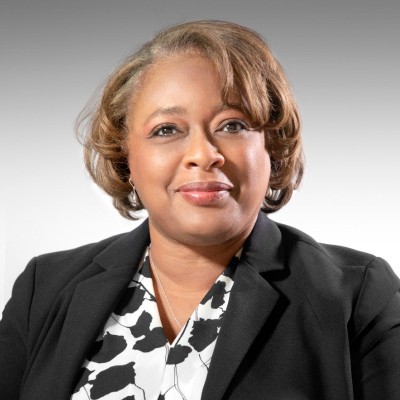 8:00 — CCTM Opening and Keynote with Latrenda Knighten, President, National Council of Teachers of Mathematics 8:00 — CCTM Opening and Keynote with Latrenda Knighten, President, National Council of Teachers of Mathematics
Latrenda Knighten is President of the National Council of Teachers of Mathematics (NCTM). She has been an educator for more than 30 years and recently retired as Mathematics Curriculum Supervisor in Baton Rouge, Louisiana. She has been a classroom teacher, an elementary science specialist, an elementary mathematics coach, a district instructional coach, and a mathematics content trainer. Latrenda Knighten is also the co-author of two books: Classroom-Ready Rich Math Tasks, Grades K-1 and Answers to Your Biggest Questions About Teaching Elementary Math, K-5. She is a frequent speaker at mathematics education conferences and a regular presenter at workshops, providing ongoing professional development for teachers.
9:30 - 9:45 — Partner Interactions/Transitions
Session C, Friday, 9:45 - 10:45 (Expand/Collapse)
Math Intervention Needs a Makeover
- Lead Presenter: Juliana Tapper, CollaboratEd
- Location: Library
- Intended Audience: 3-5, 6-8, 9-12, Coaches, Administrators
- Session Description: Do you teach students who struggle with math? In this session we’ll compare traditional intervention methods with a math intervention makeover model that closes gaps and keeps apathy at bay. Learn the three key levers you can pull for this makeover: Community, Purpose, and Structure. Attendees will leave with actionable takeaways for building more equitable and effective math interventions, whether you teach in a formal intervention setting or as the core teacher with many students who struggle.
Math in Minutes: Quick Wins with Polypad & Amplify Classroom
- Lead Presenter: Kurt Salisbury, Amplify/Desmos
- Location: Room 110
- Intended Audience: K-2, 3-5, 6-8, 9-12
- Session Description: Join us for a fast-paced, idea-packed session on class openers, warm-ups, and quick games that spark rich mathematical thinking and discussion. These short activities work inside or outside your math block and can be revisited all year long, keeping students engaged, curious, and ready to learn.
Unlocking the Power of the TI- 84 Evo
- Lead Presenter: Curtis Brown, Texas Instruments
- Location: Room 111
- Intended Audience:
- Session Description: Discover what’s new — and what you never knew! This session introduces the exciting new features of the TI-84 Evo while uncovering powerful, often-overlooked capabilities of the TI-84 family that many users missed. You’ll leave with practical strategies to enhance instruction, deepen student understanding, and support students during standardized exams. No device needed — just come ready to learn!
Data Science in Elementary Classrooms: Why It Matters and How to Start
- Lead Presenter: Hannah Kurzweil, Data Science 4 Everyone
- Additional Presenters: Hannah Weissman, Data Science 4 Everyone
- Location: Room 112
- Intended Audience: K-2, 3-5
- Session Description: While AI and information abundance dominate headlines, the truth is simpler: elementary students already use data all the time. Every time they argue about the “best” recess game or wonder if it really rains more on Mondays, they’re ready to think with data. This session explores why K-5 students need data intuition to navigate an increasingly data-driven world and shows you exactly how to build it. You’ll see what age-appropriate data science looks like for young learners, explore concrete examples that connect to students’ lives and interests, and walk away with curriculum-agnostic strategies that integrate seamlessly into your existing math, science, and social studies instruction—no specialized technology or prior expertise required.
Algebra Tiles: Building Conceptual Understanding of Expressions and Equations
- Lead Presenter: Pam Chavez, CPM 2
- Additional Presenters: Joel Miller, CPM
- Location: Room 114
- Intended Audience: 6-8
- Session Description: In this hands-on session, participants will learn how to use algebra tiles to support their students’ conceptual understanding of middle school math topics. Teachers will leave with a handout of problems to use with students, building confidence in topics such as combining like terms, comparing expressions, and solving equations. Participants for this session will benefit from practicing the problems in teams while experiencing the facilitation and questioning in a student-centered classroom.
Interactive Simulations for Empowering All Math Learners
- Lead Presenter: Amanda McGarry, PhET Interactive Simulations, University of Colorado Boulder
- Additional Presenters: Catherine Carter, PhET Interactive Simulations
- Location: Room 116
- Intended Audience: K-2, 3-5, 6-8, 9-12, Post Secondary, Pre Service, Coaches, Administrators
- Session Description: All students deserve high-quality math learning experiences. This session showcases how free research-based PhET simulations support broad access– through dynamic visuals, comprehensive auditory experiences, multiple input modalities, and multiple languages– while fostering agency and deep conceptual understanding. Participants will explore how teachers can pair these features with prompts that allow students to choose their own problem-solving paths, leading to robust, inclusive learning.
Unpacking our Beliefs: Designing Tasks that Reflect True Mathematics
- Lead Presenter: Joseph Bolz, George Washington High School
- Location: Room 117
- Intended Audience: 6-8, 9-12, Pre Service, Coaches, Administrators
- Session Description: During the NCTM 2025 Ignite session, I had the honor to speak about our beliefs of mathematics and the power they have over the way we teach mathematics. During this session, we will dive into what we truly believe mathematics is and then work to dismantle undproductive tasks and turn them into tasks that represent our beliefs and values as they relate to mathematics. Participants will not only engage in these tasks, but also leave with tasks and templates they can apply in their classrooms.
Using Early Number Systems to Teach Place Value
- Lead Presenter: Mark Koester, MSU Denver
- Additional Presenters: Sarah Adi and Jordan Glanz, MSU Denver
- Location: Room 118
- Intended Audience: K-2, 3-5, Pre Service, Coaches
- Session Description: Learning and analyzing several different early number systems (e.g., Mayan, Egyptian and Babylonian) can provide insight into our Base 10 number system, especially, the development of place value thinking in a, positional number system. Misconceptions that your students will have become more apparent for you when you are working with a different and unfamiliar number system.
Pattern Blocks: To Fractions and Beyond!
- Lead Presenter: Casey Andree, Carnegie Learning
- Location: Room 120
- Intended Audience: TBD
- Session Description: Build your skills using the CRA (Concrete-Representational-Abstract) Framework in a hands-on session using pattern blocks. Together, we’ll apply pattern blocks to algebraic and geometric concepts, develop our understanding and skillset around moving through CRA, and have a great time doing math together.
10:45 - 11:00 — Partner Interactions/Transitions
Session D, Friday, 11:00 - 12:00 (Expand/Collapse)
Create a Community of Problem Solvers with The Resources You Already Have
- Lead Presenter: Mona Iehl , Chicago Math Group, MonaMath.com
- Location: Library
- Intended Audience: K-2, 3-5
- Session Description: Gain strategies to transform your existing curriculum into lessons that spark thinking, reasoning, and problem solving. Leave with simple ways to open up curriculum tasks, differentiate through “Nudges and Nuggets,” and guide students to discuss their reasoning in math discussions. Analyze the strategies in action with real classroom videos and student work and walk away with a clear plan to build a joyful, student-centered math community.
All Access Pass to Meaningful Math
- Lead Presenter: Joy Bragg, Savvas Learning Company
- Location: Room 110
- Intended Audience: K-2, 3-5, 6-8
- Session Description: Let’s investigate open tasks that invite all students into the math. 5 Practices for Orchestrating Productive Mathematics Discussions by Smith and Stein 2nd Edition* encourages all students to work at levels that are appropriately challenging for them, within the content in their grade. Discover how to make this happen with ease in your classroom and have some fun while we are at it!
Building Deeper Conceptual Understanding with Real-World Investigations
- Lead Presenter: Brian Duncliffe, Texas Instruments
- Additional Presenters: Judy Hicks
- Location: Room 111
- Intended Audience: 6-8, 9-12
- Session Description: Are your students struggling to see the connections between mathematical concepts and their real-world applications? Do they view slope as just “rise over run” without understanding its power as rate of change across disciplines? Are they disengaged during traditional instruction? Discover how to transform abstract mathematical concepts into tangible learning experiences that bridge math and science while creating an actively engaged classroom environment. Using graphing technology and data collection sensors, you’ll explore student-centered investigations that make core concepts like slope, rate of change, linear relationships, geometry and functions come alive through authentic data collection—turning passive learners into active investigators.
Data Tools for Middle School Classrooms
- Lead Presenter: Hannah Kurzweil, Data Science 4 Everyone
- Location: Room 112
- Intended Audience: 6-8
- Session Description: This will an exciting and highly interactive workshop designed specifically for middle school educators ready to bring the power of data into their classrooms! We will unveiling DataToolTechMatch — a brand-new resource built by DS4E’s Middle School Working Group to help teachers find the perfect data science tool for their teaching style, grade level, and comfort with technology. No experience required. The workshop will jump into interactive sessions that will walk participants through multiple classroom-ready tools and give them the chance to explore, ask questions, and leave with something they can actually use on Monday morning.
Understanding Fractions: Fraction Progressions and Conceptual Understanding
- Lead Presenter: Kim Broker, 2Partner Mathematics Consulting
- Additional Presenters: Rachael Risley, 2Partner Mathematics
- Location: Room 114
- Intended Audience: K-2, 3-5, 6-8, Coaches, Administrators
- Session Description: Fractions are a mathematics content area that is often cited as the least favorite among teachers and students. Together, we will examine and refine our conceptual understanding of fractions! We will identify language, models, and strategies that support conceptual understanding of fractions. And, we engage in mathematics using the language, models, and strategies that support the conceptual understanding of fractions Participants will enhance their plan and preparation for teaching fractions by knowing the appropriate language and models to support their students’ current fractional learning.
Still Standing: Practical Sustainability for Math Educators
- Lead Presenter: Joanie Funderburk, CCTM
- Location: Room 116
- Intended Audience: K-2, 3-5, 6-8, 9-12, Post Secondary, Pre Service, Coaches, Administrators
- Session Description: Math teachers face pressures that are structural, cultural, and relentless. This session cuts through the noise to address three honest realities: burnout isn’t a personal failure, math teachers carry a unique emotional load, and sustainable careers require intentional community. Attendees will engage in research-backed reflection activities, identify strategies for managing the weight of math culture in their classrooms, and map the professional connections that keep good teachers in the profession. Practical. Grounded. For math teachers who are tired but not done.
The Asset-Based Math Class: Using Student Strengths to Increase Engagement
- Lead Presenter: Mark Kieffer, Smoky Hill High School/Cherry Creek School District
- Location: Room 117
- Intended Audience: 6-8, 9-12, Coaches, Administrators
- Session Description: This session will challenge deficit narratives and include strategies that can be implemented right away to design lessons based on student and class strengths. Using my own classes as a case study, see how leveraging these strengths can bring about the highly engaged class of your dreams while building equitable access to rigorous, grade level math instruction!
All Minds on Math Workshop
- Lead Presenter: Wendy Ward Hoffer, PEBC
- Location: Room 118
- Intended Audience: K-2, 3-5, 6-8, 9-12, Coaches, Administrators
- Session Description: In this experiential session, we will explore the concept and structure of math workshop as a resource for engaging, challenging and supporting math learners at all levels. The session will draw from my recent booth, All Minds on Mathematics (Heinemann, 2026), and identifying planning strategies for purpose-driven math workshops.
Why Not Both? Rethinking Rigor and the Reality of Teaching Secondary Mathematics.
- Lead Presenter: Becca Corsi-Kimble, Imagine Learning
- Location: Room 120
- Intended Audience: K-12
- Session Description: Have you ever felt scrutinized for the way you teach math? Drawing from recent national data and classroom research, this session challenges the false dichotomy between conceptual and procedural instruction. Participants will explore how teacher autonomy, balanced pedagogy, and evidence-based flexibility can improve learning, confidence, and equity in secondary mathematics classrooms. Participants will learn how to reconcile the tension between ambitious, problem-based instruction and effective explicit teaching without feeling they’ve betrayed their values or their curriculum.
12:00 - 1:00 — Lunch
Session E, Friday, 1:00 - 2:00 (Expand/Collapse)
From Complexity to Clarity: Colorado’s High School Math Standards Revised
- Lead Presenter: Joanie Funderburk, Colorado High School Mathematics Standards Revision Committee
- Additional Presenters: Amber Gardner, Kara Ingram, Lisa Rogers, Revision Committee Members; Raymond Johnson, CDE
- Location: Library
- Intended Audience: 9-12, Post Secondary, Pre Service, Coaches, Administrators
- Session Description: Fewer standards. Simpler structure. Stronger focus on what students actually need. Colorado’s revised high school math standards represent a meaningful shift — and this session breaks it all down in plain language. We’ll cover the big-picture changes to format and organization, the content decisions that modernized the standards, and the new pathway model designed to support every learner’s post-secondary goals. Whether you’re a classroom teacher, coach, or curriculum leader, come ready to ask questions and get oriented to what’s new and why it matters.
Make Math Talk Happen: Real Talk for Real Classrooms
- Lead Presenter: Becky Ramirez, Cengage
- Location: Room 110
- Intended Audience: TBD
- Session Description: Math talk doesn’t just happen—it’s intentionally built. In this interactive session, experience practical routines and strategies that get every student talking, thinking, and making sense of mathematics. Engage in hands-on activities that model high-impact discourse moves, including talk moves, sentence stems, and scaffolds that support all learners. Explore how to create a classroom culture where students actively listen, respond, and build on one another’s ideas. Walk away with ready-to-use tools to make math talk a consistent, meaningful part of your everyday instruction—so every voice is heard and every learner contributes.
The Power of Consistency in Math Instruction: Leaning into Routines for Impactful Teaching
- Lead Presenter: Marissa Caine, Great Minds
- Location: Room 111
- Intended Audience: K-12
- Session Description: Participants will explore the role of consistency with structures and routines in simplifying implementation and reducing cognitive load for teachers and students. In addition, they will identify features in math instructional design that promote strategic consistency, allowing students and teachers to focus more on the math itself. These features include overviews, coherent models, and lesson components and instructional routines that foster consistent practices.
Data Science Across K-12: Building Student Engagement and Future-Ready Skills
- Lead Presenter: Hannah Kurzweil, Data Science 4 Everyone
- Additional Presenters: Hannah Weissman, Data Science 4 Everyone
- Location: Room 112
- Intended Audience: K-2, 3-5, 6-8, 9-12
- Session Description: Data shapes modern life: from apps to news to decisions in health, business, and government, yet most students graduate without exposure to data science concepts. As Colorado develops its data science pathway, understanding what curriculum-agnostic data instruction looks like across all grade levels becomes essential. This session explores why data science is critical for all K-12 students, not just future data scientists, and demonstrates how it increases student engagement by connecting to real-world problems students care about. You’ll see how data literacy develops from elementary through high school, discover what age-appropriate instruction looks like across grades and subjects, and explore ready-to-use activities that bring these concepts to life. Whether you teach math, science, social studies, or other subjects, you’ll leave with grade-appropriate entry points and practical strategies for infusing data literacy into your classroom, preparing students to thrive as informed, critical thinkers in our data-driven world.
Using Fractional Reasoing Screeners to Prepare Student for MS and HS Mathematics
- Lead Presenter: Katie Johnson, Forefront Education
- Location: Room 114
- Intended Audience: 3-5, 6-8
- Session Description: We will explore the 6 Facets of Fractional Reasoning by learning about Forefront Education’s Fractional Reasoning Screeners. We will analyze actual student work from these assessments to determine next instructional steps. We will dig into next step resources from experts in the field and see how Forefront Education’s platform can help teacher’s analyze data and progress monitor.
Beyond Numbers: Using Picture Books to Deepen Mathematical Thinking
- Lead Presenter: Gracee Liggett, Evans Elementary/D49
- Additional Presenters: Viola Lee, D49
- Location: Room 116
- Intended Audience: K-2, 3-5
- Session Description: What if math felt more like a story? In this hands-on make-and-take session, explore how picture books can spark rich mathematical thinking in K–5 classrooms. Participants will experience engaging tasks tied to key math concepts and leave with ready-to-use ideas, templates, and a curated book list to boost student confidence, discourse, and understanding.
From Trauma to Triumph: Building Rich Math Experiences Through Try-Discuss-Connect
- Lead Presenter: Naneka Brathwaite, Currriculum Associates, i-Ready
- Location: Room 117
- Intended Audience: K-8
- Session Description: Math trauma is real — and research shows it doesn’t stop at the classroom door. In this hands-on workshop, participants will examine how unresolved math anxiety can quietly shape instructional choices, then experience an alternative firsthand. Working through a rich math problem together, participants will engage in the same sensemaking routines, structured discourse, and meaning-making connections that characterize student-centered math instruction. Leave with practical strategies, a clear framework, and one meaningful shift you can make in your classroom — starting Monday.
- Lead Presenter: Geoff Krall, Colorado State University
- Location: Room 118
- Intended Audience: 6-8, 9-12, Post Secondary
- Session Description: While alternative assessment is always a hot topic in research, advocacy, and keynote addresses at conferences, concrete models are difficult to find. This session will explore how the presenter created and fundamentally altered assessments in a Calculus class. Rather than quizzes, a series of mathematical labs focused on scientific applications were developed. These labs formed the foundation of the class, resulting in higher satisfaction from students and documented enhancement in engagement.
That’s So 2020!
- Lead Presenter: Dr. Mike Flanagan, Kiddom
- Location: Room 120
- Intended Audience: K-2, 3-5, 6-8, 9-12, Pre Service, Coaches, Administrators, Other
- Session Description: As we navigate the latest wave of educational technology, AI in classrooms, we find ourselves at another crossroads. It’s a familiar question, now shaped by an influx of new digital tools: what does healthy use of technology look like when the goal is real academic growth and on-grade level achievement? With growing research around screen time, we are, in many ways, back where we were a decade ago. Only now, we also carry the lived experience of remote learning, when well-intentioned decisions ultimately anchored students to screens with no better option. What if we approached this moment differently? Join us to explore a shift away from device-centric classrooms toward a more intentional and balanced use of technology, where devices play a purposeful role within each lesson and digital tools are designed to support teachers first. One that makes teachers’ work faster, easier, and more data-informed, while bringing students back to what matters most: discourse, curiosity, excitement, and joy in learning. Whether you’re building a thinking classroom or refining a workshop model, there’s an opportunity to take it further.
2:00 - 2:15 — Partner Interactions/Transitions
Session F, Friday, 2:15 - 3:15 (Expand/Collapse)
Who’s Talking in Math Class? Using Instructional Routines as a Tool to Facilitate Student Understanding of Math Content and Language
- Lead Presenter: Latrenda Knighten, National Council of Teachers of Mathematics
- Location: Library
- Intended Audience: K-2, 3-5
- Session Description: To support the mathematics learning of all students, effective teachers establish an environment where students regularly engage in productive mathematics discourse. To facilitate mathematics learning for all, students must have opportunities to talk with, respond to, and question one another to create a classroom community centered on discourse. In this session, participants will explore strategies and instructional routines to facilitate productive mathematics discourse and promote problem solving, reasoning, and critical-thinking skills in a student-centered classroom.
When Struggle Gets Outsourced: Rethinking Math Tasks in the Age of AI
- Lead Presenter: Kurt Salisbury, Ph.D., Amplify
- Location: Room 110
- Intended Audience: 6-8, 9-12, Coaches, Administrators
- Session Description: As AI tools like ChatGPT and Photomath become part of students’ daily routines, our go-to math tasks face new challenges. Grounded in NCTM’s Principles to Actions and Standards for School Mathematics and Polya’s problem-solving framework, this session will examine how to design tasks, discussions, and assessments that emphasize process over product, reward thinking over speed, and encourage students to engage deeply rather than delegate their struggles to a tool.
Best Practices For Using Technology To Truly Differentiate Math Instruction
- Lead Presenter: James Zeller, IXL Learning
- Location: Room 111
- Intended Audience: K-2, 3-5, 6-8, 9-12, Coaches, Administrators
- Session Description: When implemented correctly, educational technology can empower teachers to reach students at all levels while also meeting historical educational challenges in new innovative ways. This session will offer best practices for using educational technology in a math classroom. Based on hundreds of research studies, we will share strategies proven to increase engagement, accelerate learning, close knowledge gaps, and maximize growth on high stakes assessments.
Bring the Power of Data to HS Classrooms: Integrated Cross-Curricular Resources
- Lead Presenter: Hannah Kurzweil, Data Science 4 Everyone
- Location: Room 112
- Intended Audience: 9-12
- Session Description: If you are a high school educator in math, science, or social studies and are wanting to bring data science and data literacy into your classrooms, this session is built for you! In this session we will walk through what data science is and why it enhances student engagement, empowers their learning, and connects concepts between classrooms. Using Data Science 4 Everyone’s DataHub, classroom ready resources are at your fingertips, organized by subject and searchable by topic. We will dive into the resources available, customize them to your classrooms, and give teachers the confidence needed to bring it back to their schools.
How to Get the Most Out of NCTM
- Lead Presenter: Joseph Bolz, George Washington High School and NCTM Board Member
- Location: Room 114
- Intended Audience: K-2, 3-5, 6-8, 9-12, Post Secondary, Pre Service, Coaches, Administrators, Other
- Session Description: Are you interested in attending this fall’s NCTM conference to be held here in Denver? Are you worried about how overwhelming it can be to attend such a big event? Or just have questions? Never fear - Colorado’s own, Dr. Joseph Bolz (board member for both CCTM and NCTM) is here to help you get the most out of attending the Annual NCTM Meeting. Come learn about how to pick sessions, what special events will be held, building connections, and all the fun NCTM has to offer!
Colorado Math Educators Speak: Professional Learning Topics for 2026-27
- Lead Presenter: Jason Cushner, Colorado Department of Education
- Additional Presenters: Tabitha Nickerson, Colorado Department of Education
- Location: Room 116
- Intended Audience: K-2, 3-5, 6-8, 9-12, Post Secondary, Pre Service, Coaches, Administrators
- Session Description: Colorado educators have spoken; in a statewide survey, there were four math topics chosen above others as areas for further professional development: facilitating discourse in math class, questioning techniques for assessing and advancing learning, just-in-time supports, and procedural fluency from conceptual understanding. We will be touching on some recent publications exploring each of these topics and perhaps even getting a sneak peek on a free related online professional development resource showcasing Colorado classrooms!
Power Pictures: Mental Images of Mathematical Reasoning
- Lead Presenter: Amber Gardner, CCSD/UNC
- Additional Presenters: Lauren Szczensy, Katie Hamel, Rebecca Malick
- Location: Room 117
- Intended Audience: K-2, 3-5, 6-8, 9-12, Pre Service, Coaches, Administrators
- Session Description: Students often learn procedures before developing mental images (“Power Pictures”) for reasoning. This session bridges cognitive and neuroscience research with classroom practice to show how understanding Power Pictures improves instruction across PK–12. Participants will learn how to make student thinking visible, identify the mental structures students are using, and determine what they need next. Leave with tools to strengthen instruction, support diverse learners, and grow mathematical reasoning.
Growing Algebraic Thinkers: Helping Students Represent and Make Sense of Change
- Lead Presenter: Sandy Fritz, Connected Mathematics & Lab-Aids
- Location: Room 120
- Intended Audience: 6-8
- Session Description: Ready to spark powerful algebraic thinking in your middle school classroom? Join us for an interactive, hands-on session where you’ll dive into a real-world problem, explore patterns, build representations, and uncover the big ideas that help students make sense of change. Teachers will explore changing situations and represent them using verbal descriptions, data tables, and graphs. The session highlights how recognizing patterns, interpreting relationships, and connecting multiple representations support students’ progression toward higher-level algebraic reasoning. Come ready to explore, collaborate, and rethink what algebra can look like for every learner.
3:15 - 3:45 — Closing & Prizes
|